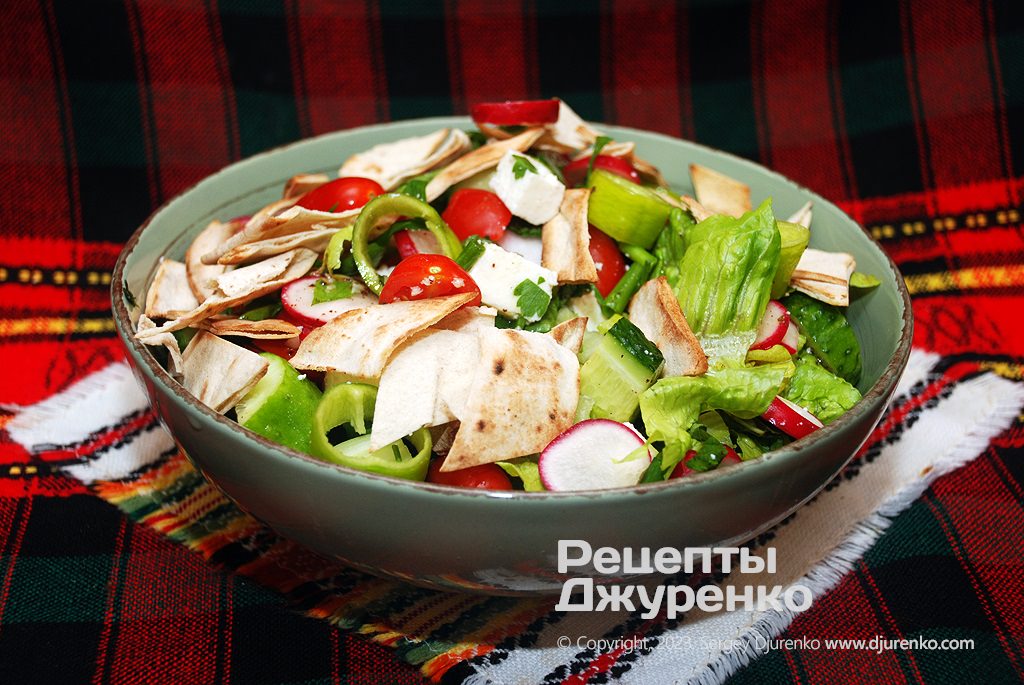
Fattoush Salad
Ingredients
4 servings
For the salad
- Lavash or pita 200 g
- Romaine or lettuce 1 bunch
- Cucumber 4-5
- Radishes 200 g
- Cherry tomatoes 200 g
- Pepper (sweet or mild-hot) 2
- Green onion 5-6
- Young cheese 150 g
- Mint, parsley to taste
- Salt a pinch
For the dressing
- Olive oil 1/4 cup
- Lemon juice 2 tbsp
- Pomegranate molasses 2-3 tbsp (or ready-made pomegranate sauce, molasses) (42–65 g)
- Garlic 1-2 cloves
- Sumac 1 tsp (3 g)
Step-by-step recipe
Ingredients and bread
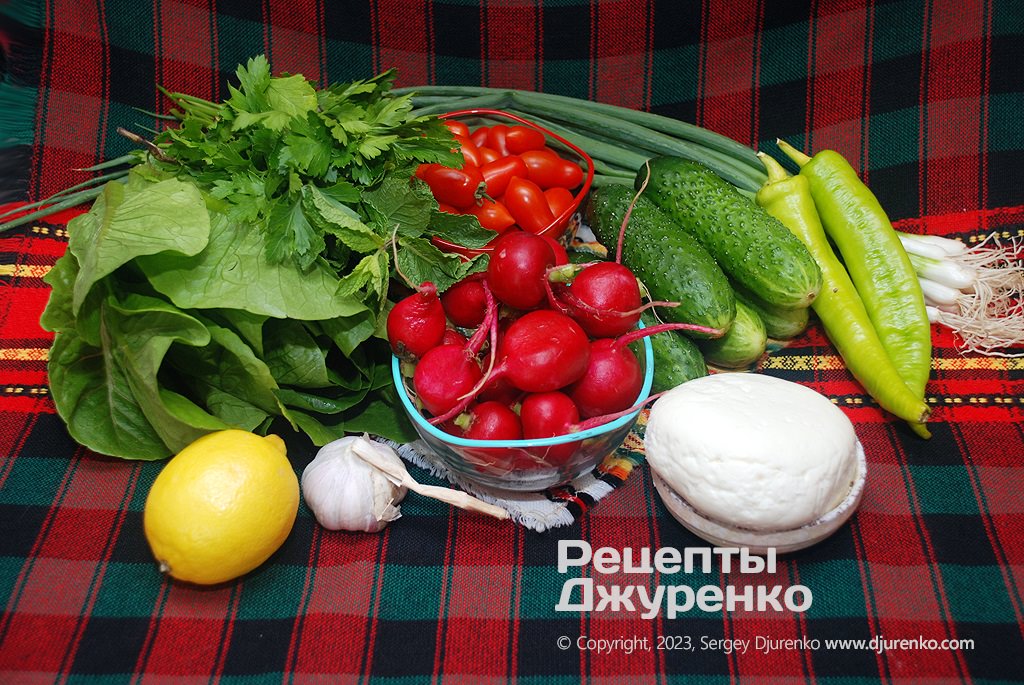
It’s important to make fattoush from the freshest vegetables, so that it turns out juicy and tasty. For the greens, lettuce or romaine is best; iceberg or spinach will do in a pinch. Use plenty of herbs and small cherry tomatoes, or so-called “cocktail” tomatoes. I add a mild-hot fresh pepper, though sweet bell pepper works too. Choose young, deep green cucumbers.
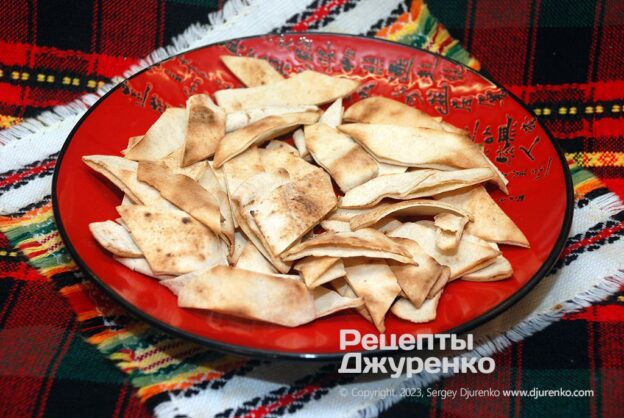
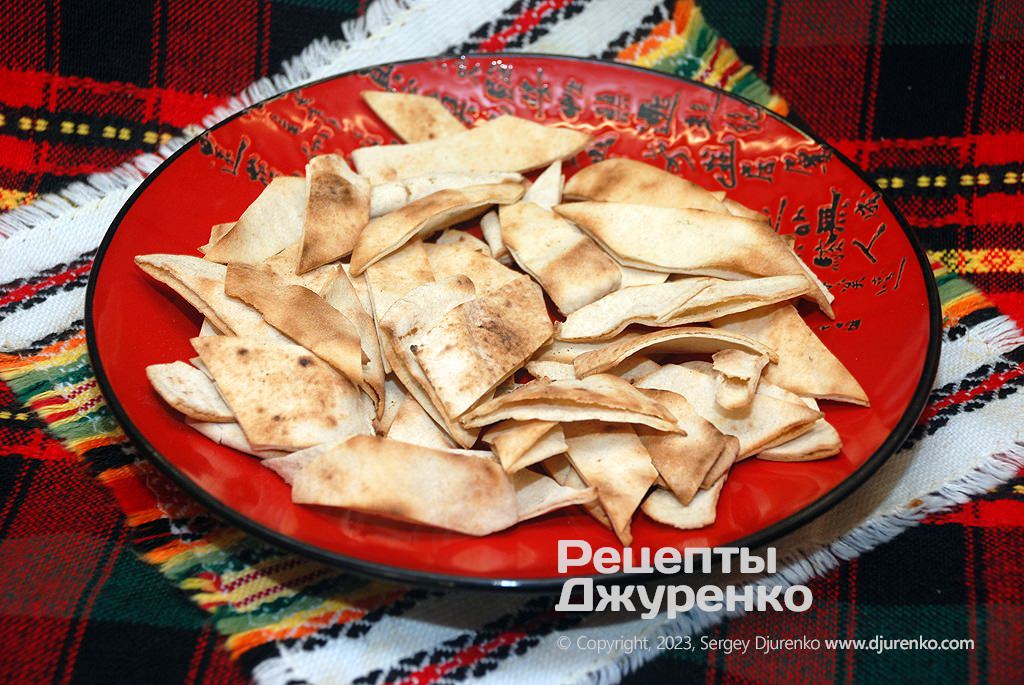
The key ingredient is toasted, dried bread. It is what defines the salad and makes it recognizable. Pita or lavash is usually used, either fried or baked. Pieces of bread are often tossed with oil and fried, or even made into “chips” by deep-frying.
Slice and fry the bread. Cut the lavash or pita into triangles, strips or diamonds, whatever you like. For my salad I fried the slices in a dry pan over medium heat until golden and nicely crisp.
Vegetables and cheese
The original recipes use juicy purslane, which is a rarity here. So we take a bunch of ordinary lettuce.
Prepare the lettuce leaves. Wash and dry the lettuce. You can tear the leaves into pieces with your fingers or cut them with a knife, as you like. Put the lettuce in a large bowl, sprinkle with a pinch of salt and toss.
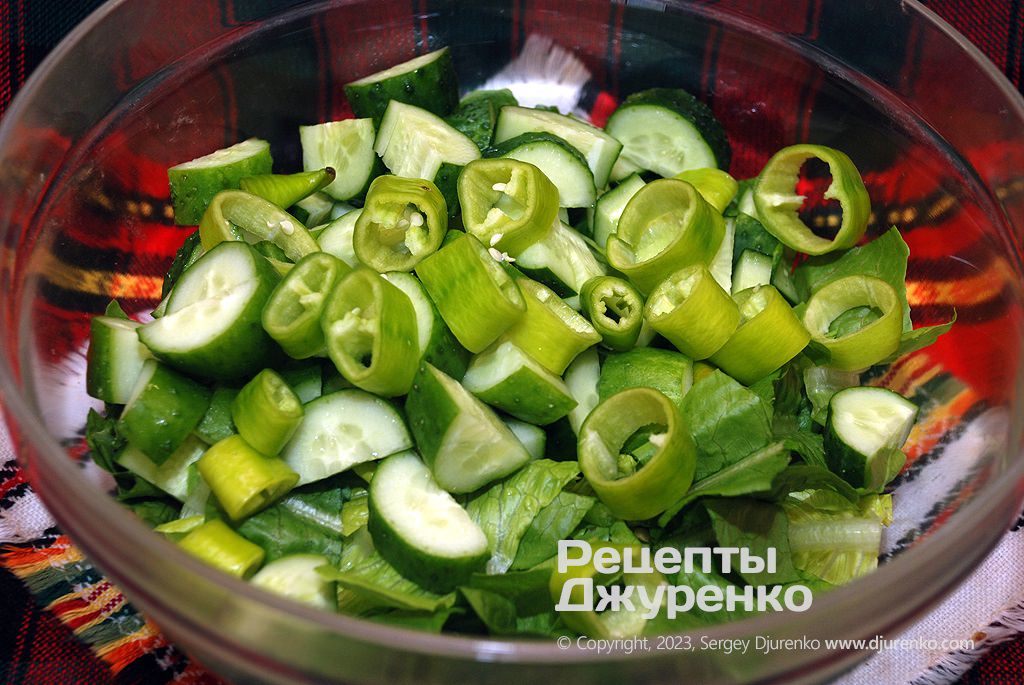
Cut the cucumbers and pepper and add them to the bowl. Young cucumbers don’t need peeling, just cut them into large cubes. Dice the sweet pepper, and cut the mild-hot one into larger pieces.
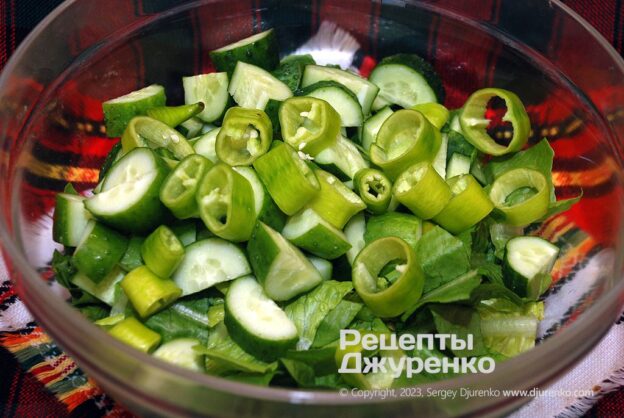
Cut the radishes, tomatoes and herbs and add them to the salad. Fattoush is especially good with young radishes. Wash them thoroughly, pat dry and cut into slices. Halve small tomatoes and quarter larger ones. Coarsely chop the green onion tops and the mint and parsley leaves.
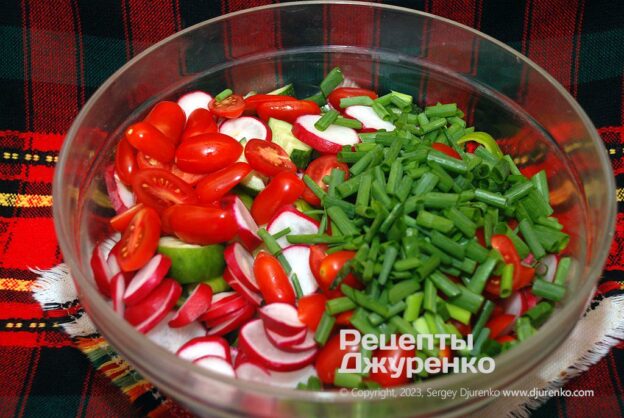
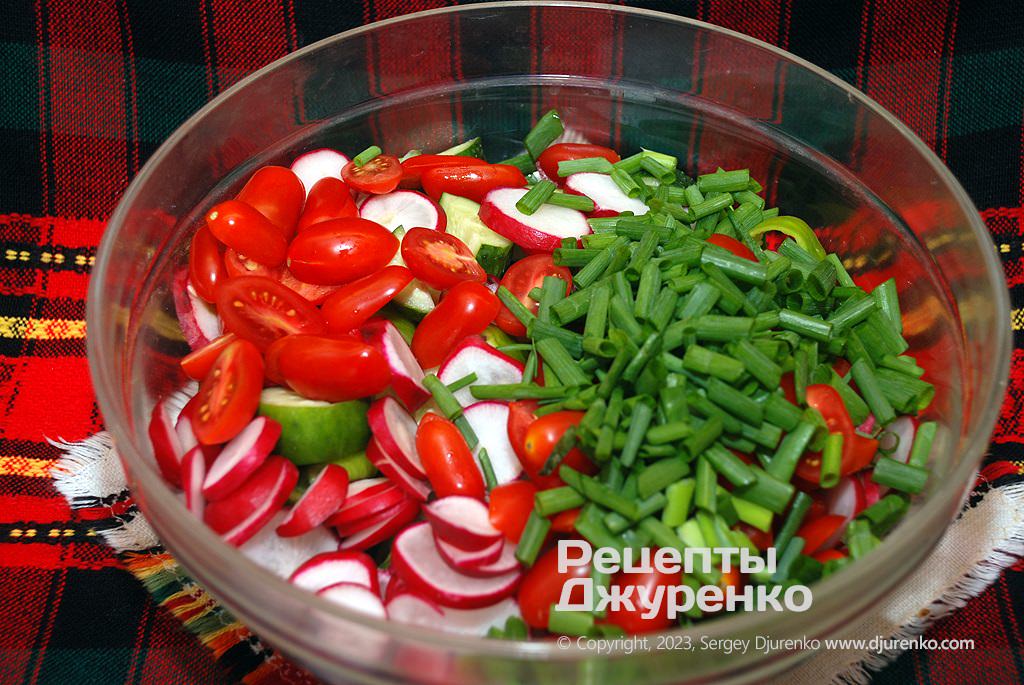
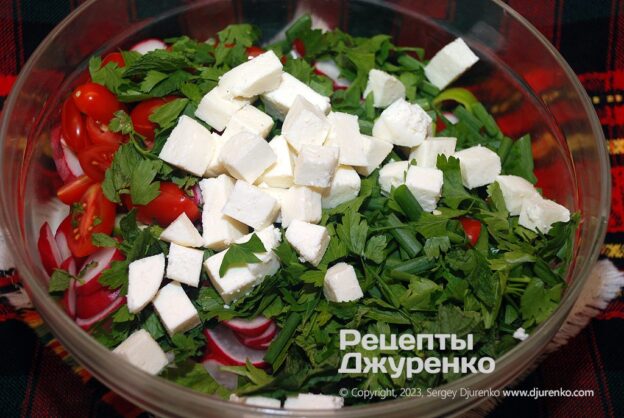
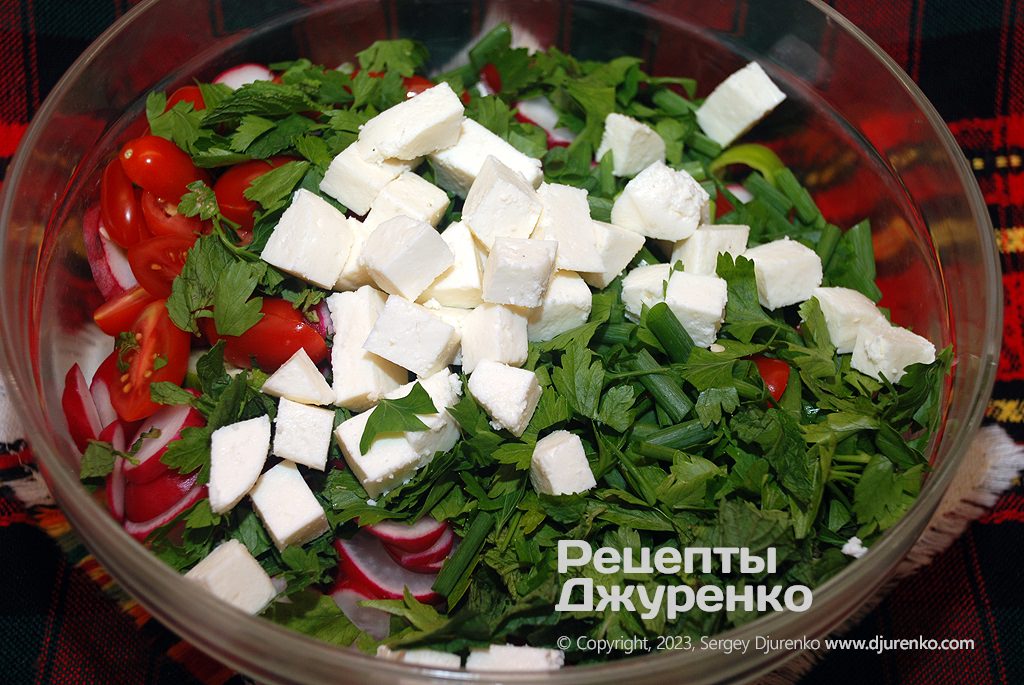
Cut the cheese into cubes, about the same size as the cucumbers. Put everything in the bowl and toss.
The original salads use local “young” cheeses, though the cheese is only an addition. You can use feta, Tzfat cheese, and Adyghe cheese works very well.
Dressing
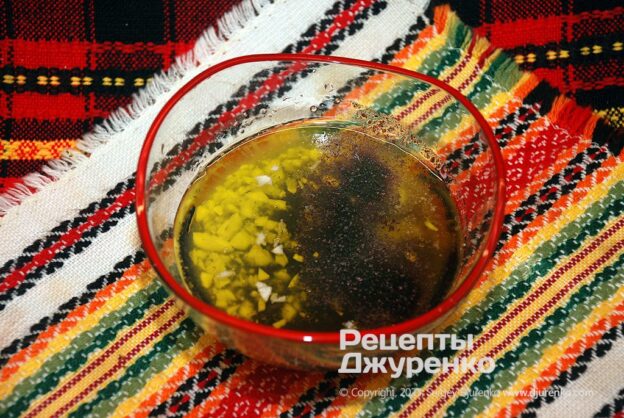
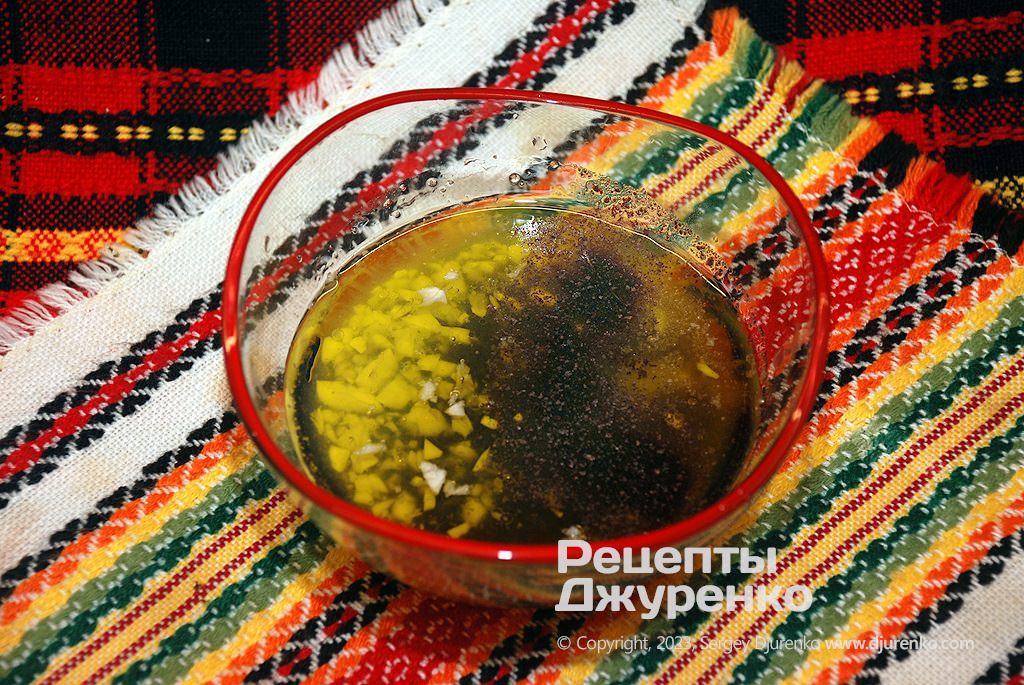
The dressing is made in a small cup or bowl.
Mix the dressing. Combine a quarter cup of the best olive oil, 2 tbsp of lemon juice and 2-3 tbsp of pomegranate molasses (42–65 g) (you can use ready-made pomegranate sauce or molasses). Peel 1-2 garlic cloves, chop them very finely with a knife and add to the dressing. Add 1 tsp of sumac (3 g), the dried and ground berries of the sumac tree, which is also a great choice for marinating meat. Whisk the mixture with a fork or an immersion blender so that it emulsifies a little.
Serving
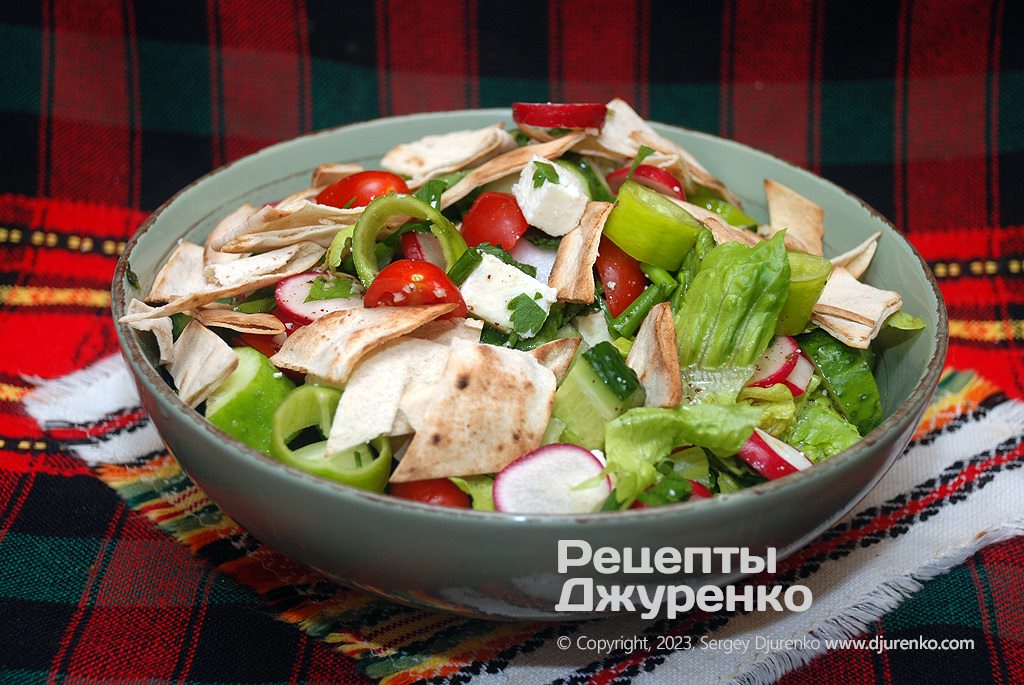
Add the dried and toasted bread to the prepared salad, pour over the dressing and toss. Serve the salad right away so the lavash stays crisp. That’s why the bread and dressing should be added just before serving. You can also serve the lavash separately, and everyone adds it to their own taste.
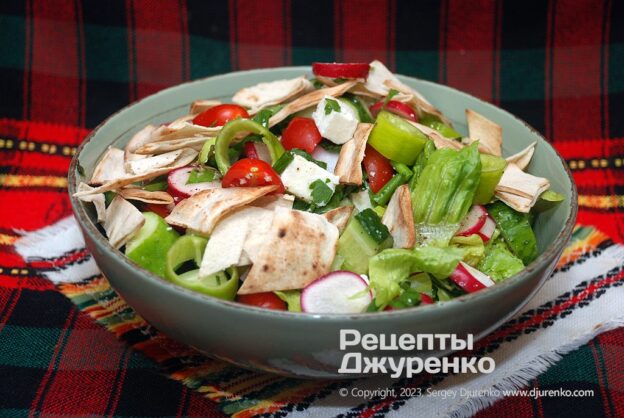
This salad is an excellent side dish for fish, chicken or meat. And if you leave out the cheese, it can be a perfectly vegetarian dish. Besides the main ingredients, people sometimes add grated carrot, multicolored peppers (which looks very colorful), olives, and shredded red cabbage instead of green leaves. You can add a little fragrant honey and black pepper to the dressing.
Calories and macros
475 kcal
Serving ≈ 470 g
- Protein17 g15% of kcal
- Fat23 g45% of kcal
- Carbs47 g41% of kcal
100 g101 kcalProtein 3.7 gFat 4.9 gCarbs 10.1 g
Calculated from the recipe ingredients, excluding salt and spices. Data: USDA and Matvaretabellen.