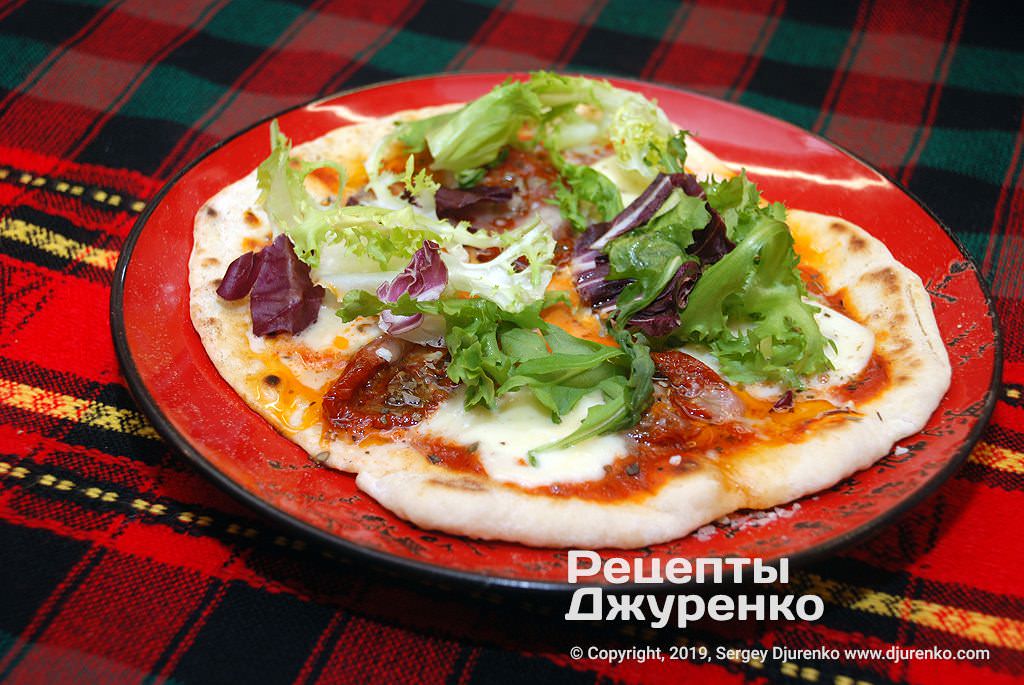
Piadina
Ingredients
4-6 flatbreads
For the dough
- Wheat flour or farina 2 cups (plus a little for dusting the table) (260 g)
- Butter, lard or olive oil 2 tbsp
- Warm water about 150 ml (180 ml together with the fat)
- Salt a pinch
- Sugar 1 tsp (optional) (5 g)
- Baking powder as needed (only for thick flatbreads)
For the filling
- Tomato sauce thick, for spreading
- Mozzarella 4-5 thin slices per flatbread
- Sun-dried tomatoes 4-5 pieces per flatbread
- Parmesan 1 tbsp per flatbread (7 g)
- Dried oregano a pinch per flatbread
- Arugula or lettuce leaves a handful per flatbread
Step-by-step recipe
Making the dough for piadina flatbreads
By and large, cooking this dough in a dry pan is no different from frying cheese khachapuri. I think they are related dishes. At any rate, although the dough is different, they are fried in almost the same way and served as bread at the table. The flatbreads are simple and quick to make, so there is no need to prepare them ahead. They are tastiest fresh.
Mix the flour with the salt: sift the wheat flour into a large bowl, add a pinch of fine salt and stir well. If you are making thin flatbreads, do not add baking powder. You can also add 1 tsp of sugar (5 g) if you like, but it makes little difference.
Melt the pork lard in a cup, but do not heat it. You can replace it with butter or olive oil.
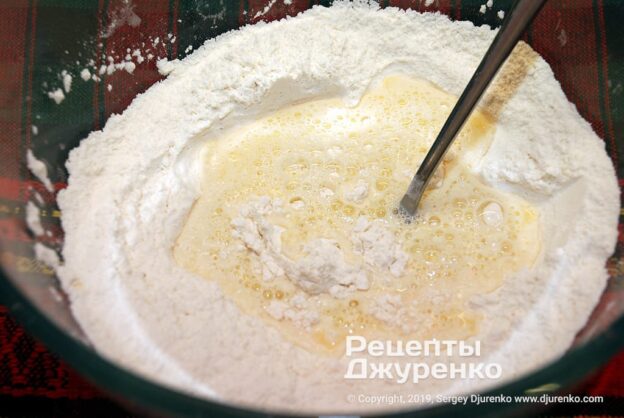
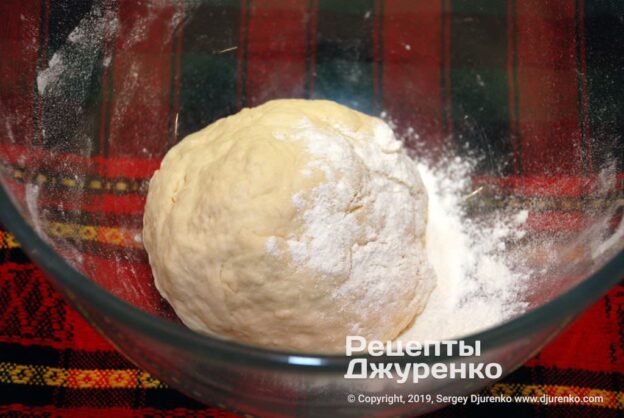
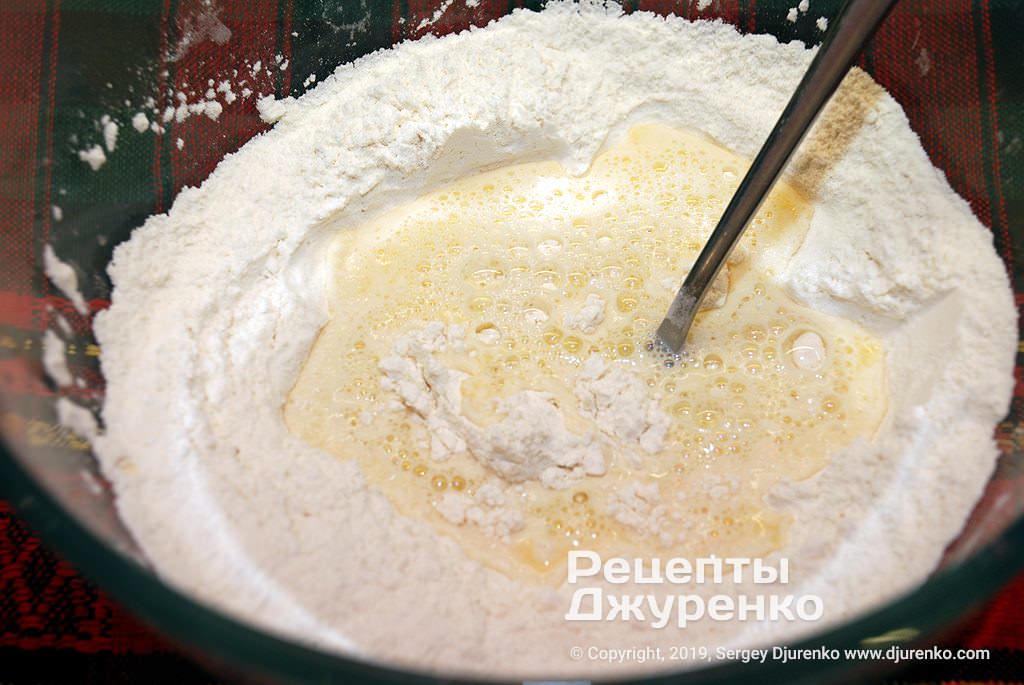
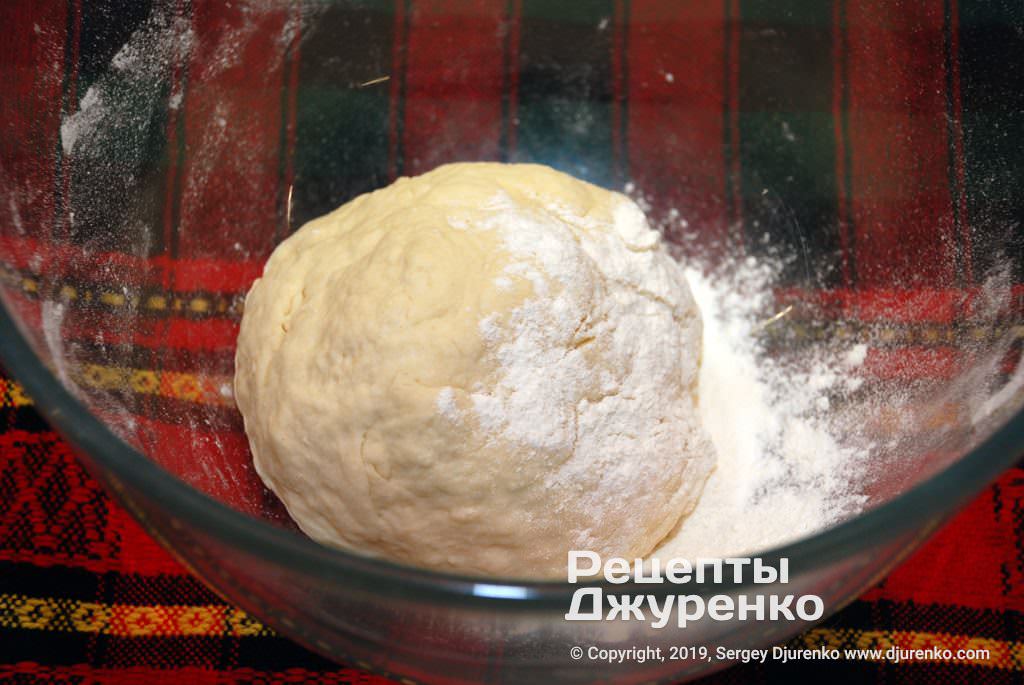
Knead the dough. Add warm water to the cup with the fat so the total volume is about 180 ml, whisk with a fork and pour the mixture into the flour. Knead a soft dough and, adding flour in small portions, work it until completely smooth. It should be very soft and slightly stretchy, but not sticky. Roll it into a ball.
Shaping and frying the flatbreads
We will fry the dough in a pan with a flat, smooth bottom. A pan for thin crepes and flatbreads works perfectly.
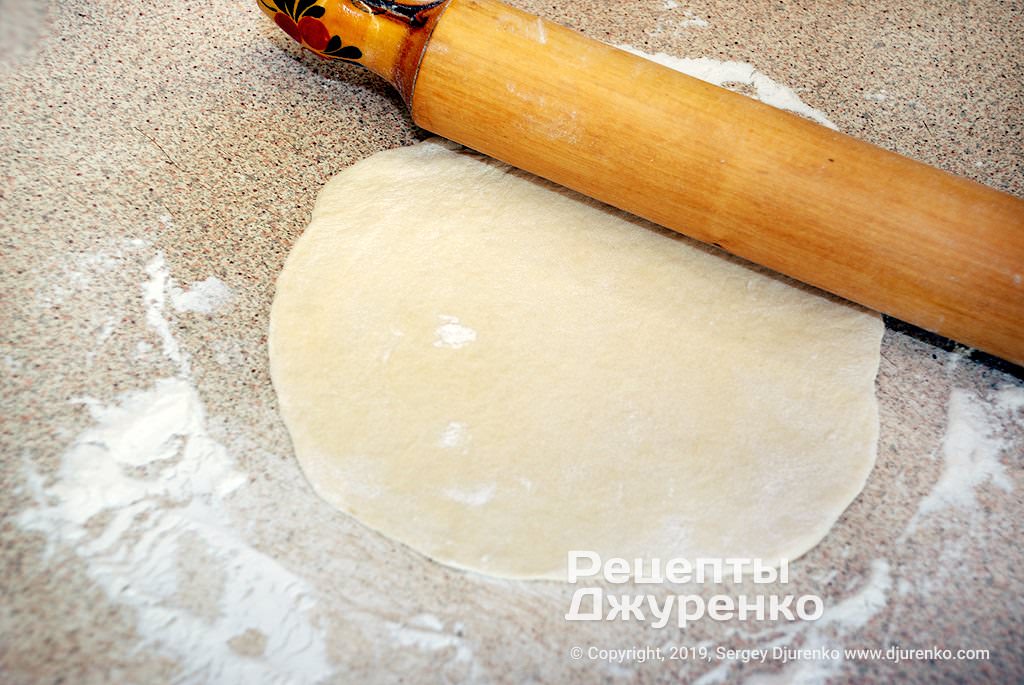
Divide the dough into 4-6 pieces, one for each flatbread, and on a floured table roll each one out with a rolling pin into a thin round, 2-3 mm thick. The round is only approximate, so geometric accuracy is not needed. If baking powder was added to the flour, the finished flatbread will be thicker, so keep that in mind.
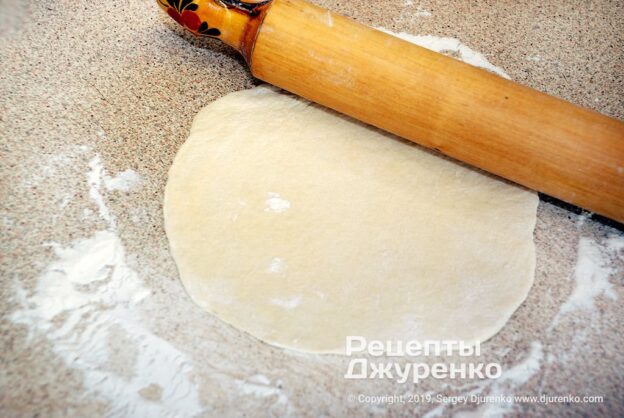
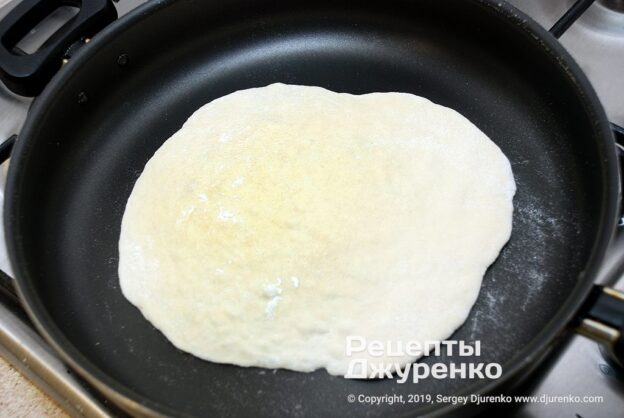
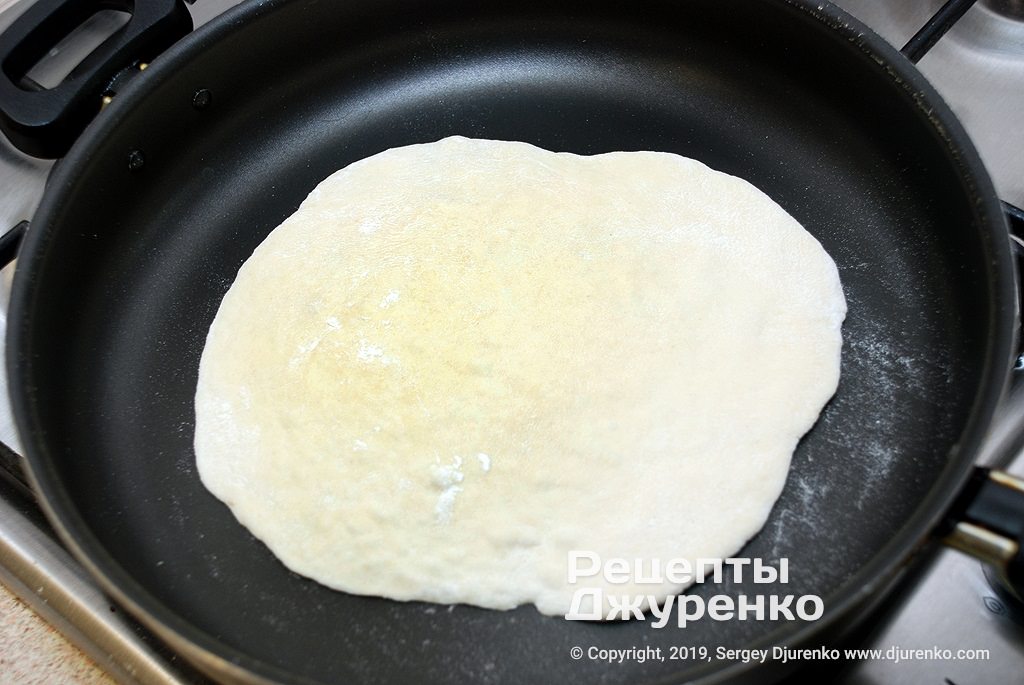
Fry the flatbreads in a dry pan, without oil. So the dough does not stick to the table or the pan, sprinkle it with a pinch of flour and rub it in with your palm. Heat the pan well, then lower the heat to low. In one movement, trying not to crumple the dough, lay the round in the pan. If you did everything right, the dough will not stick to the bottom of the pan.
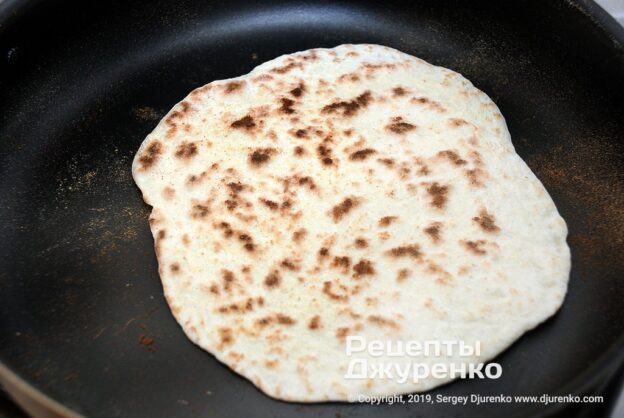
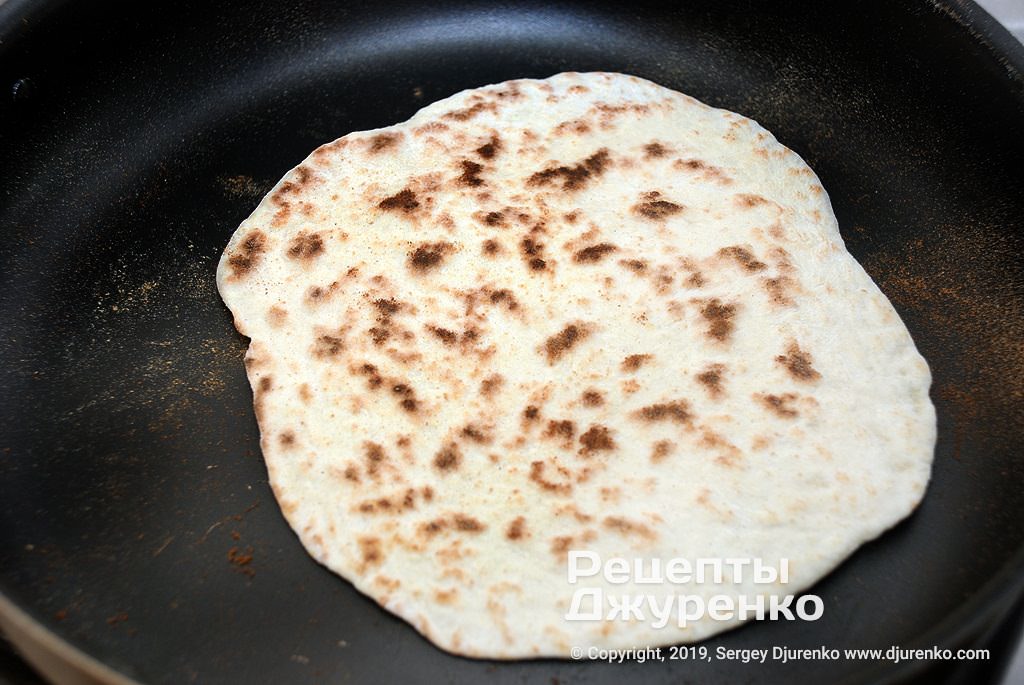
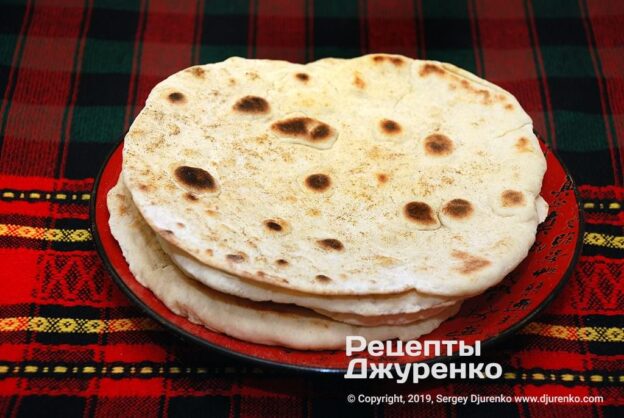
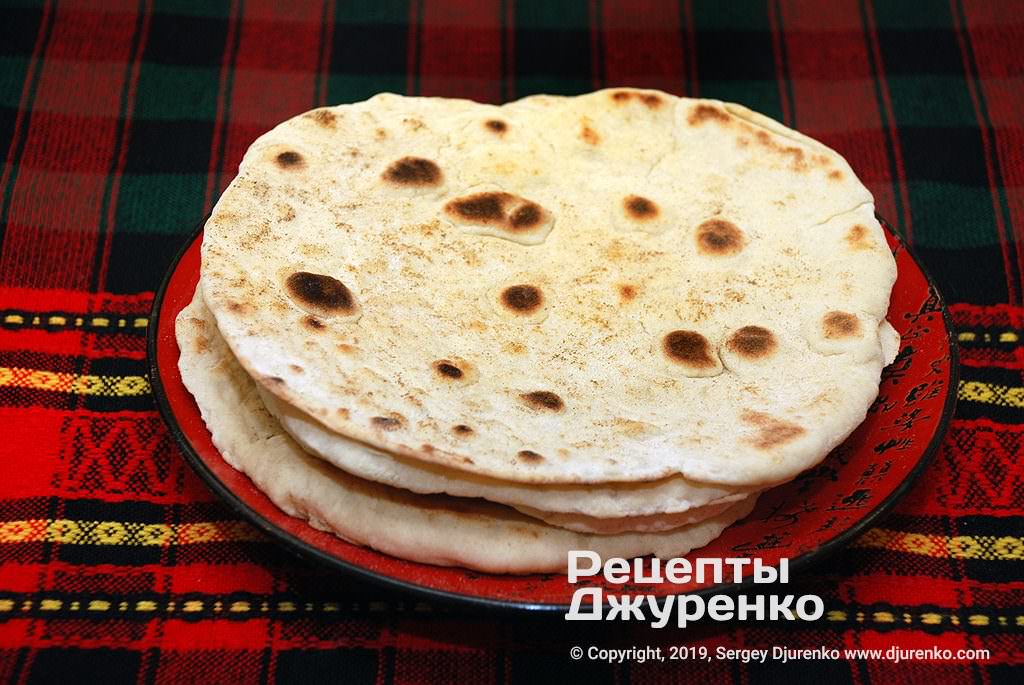
Fry the dough on both sides until it is cooked through. The steam forms small bubbles on the surface, which brown and darken more, making attractive spots and a lightly golden color. You can flip the flatbread quite often for better browning. Stack the flatbreads on a plate and cover them with a napkin.
A tasty filling for the snack
Among the many traditional fillings you can always find one to your liking, or make piadina with a filling of your own invention.
Prepare the flatbread for the filling by spreading it with tomato sauce. I advise doing this without fail. You can make the sauce yourself by frying tomato pulp with spices and olive oil. It should be thick. A little trick: since the dough is neither fluffy nor soft, it is still bread, so before adding the filling, cut lines into it with a knife, halfway through the thickness. It makes it easier to bite.
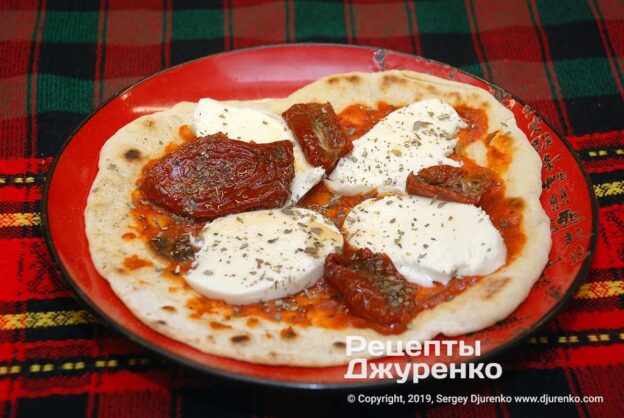
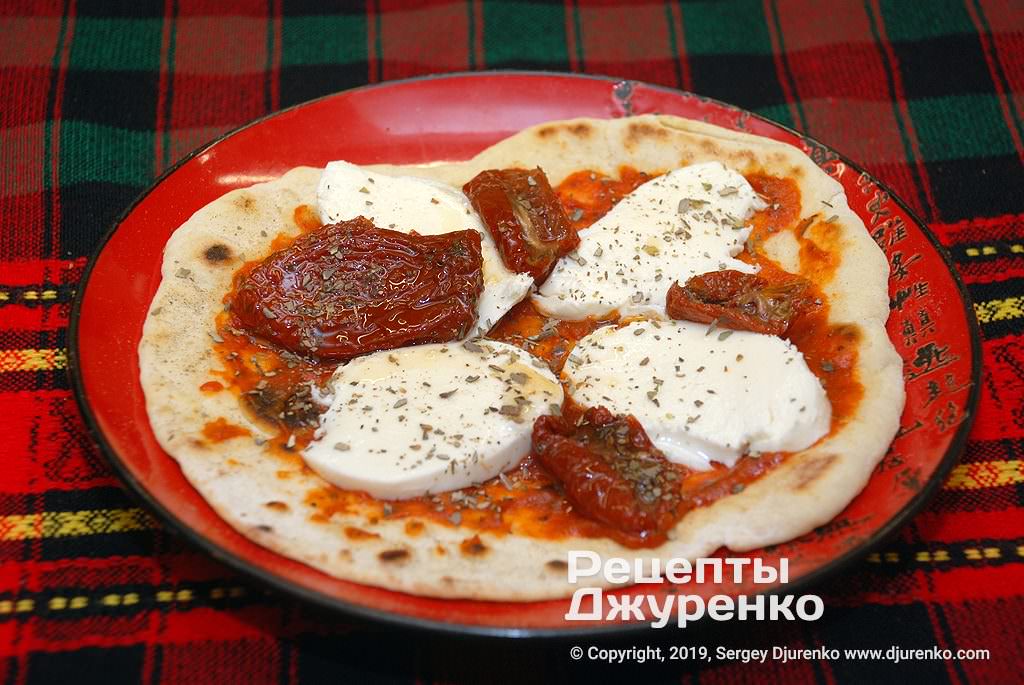
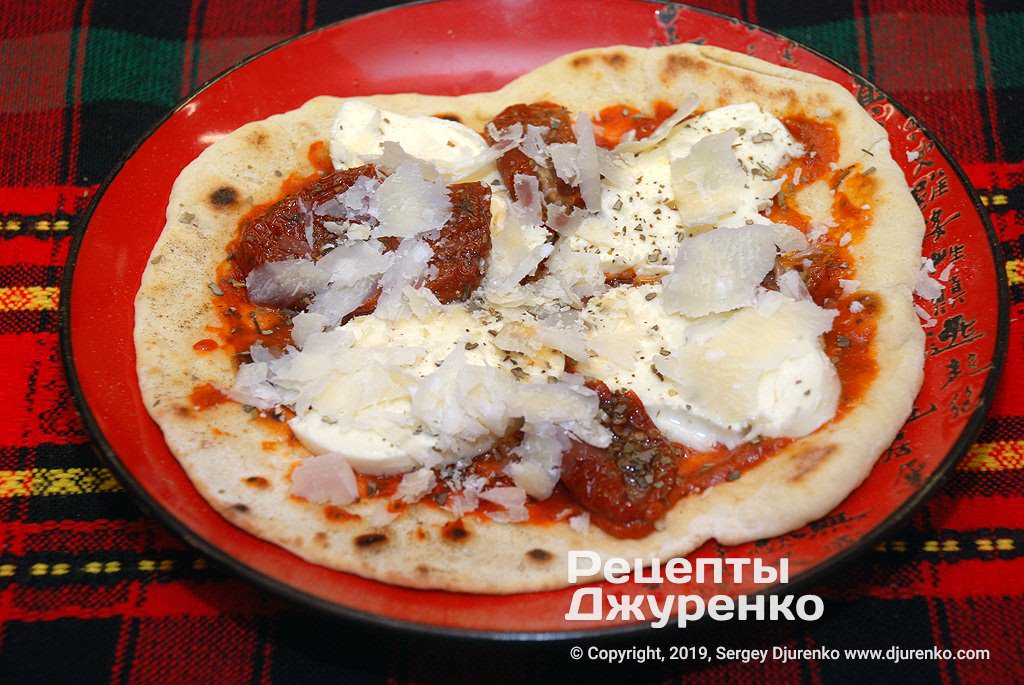
Arrange the cheese and tomatoes. On the dough spread with sauce, lay slices or small balls of fresh mozzarella. It is better not to grate it, but to lay out 4-5 thin pieces with a large surface area. Sprinkle with a pinch of dried oregano. Add 4-5 pieces of sun-dried tomato. Sun-dried tomatoes are usually stored in vegetable oil, so first lay them on a paper napkin to soak up the excess oil.
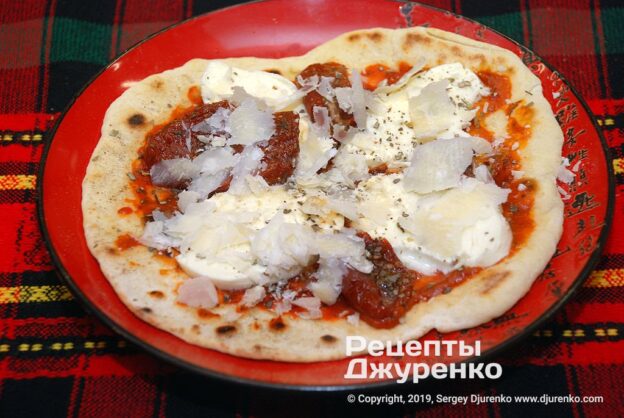
Sprinkle the filling with 1 tbsp of Parmesan (7 g), cut into fairly large flakes, and put the flatbread in an oven heated to 200°C, or in a stove oven or, as a last resort, a microwave. The goal is to melt the mozzarella and Parmesan slightly. It is quick: 5-10 mins in the oven is enough, and much less in the microwave. As soon as the mozzarella starts to melt, the dish is ready.
Serving
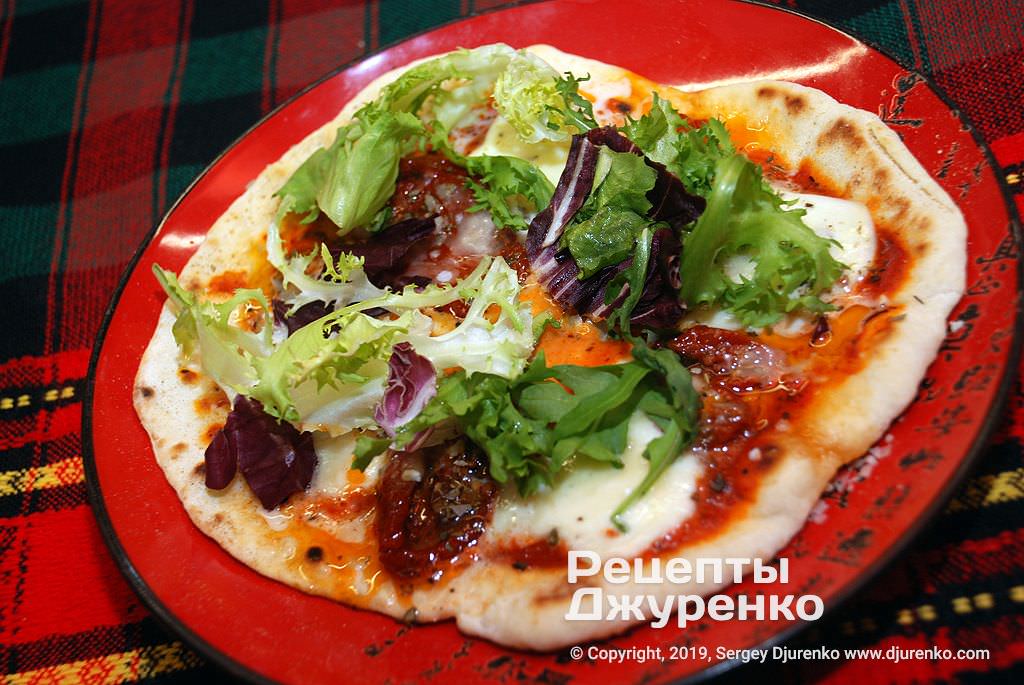
Put a handful of arugula leaves, or lettuce torn with your fingers, on top of the filling. If you are going to fold the flatbread in half, put the greens on one half and cover them with the other.
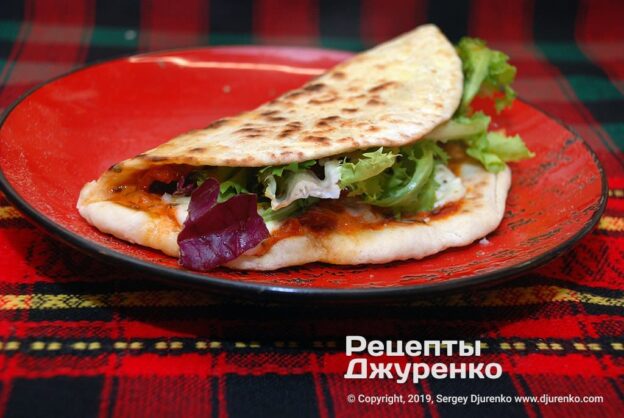
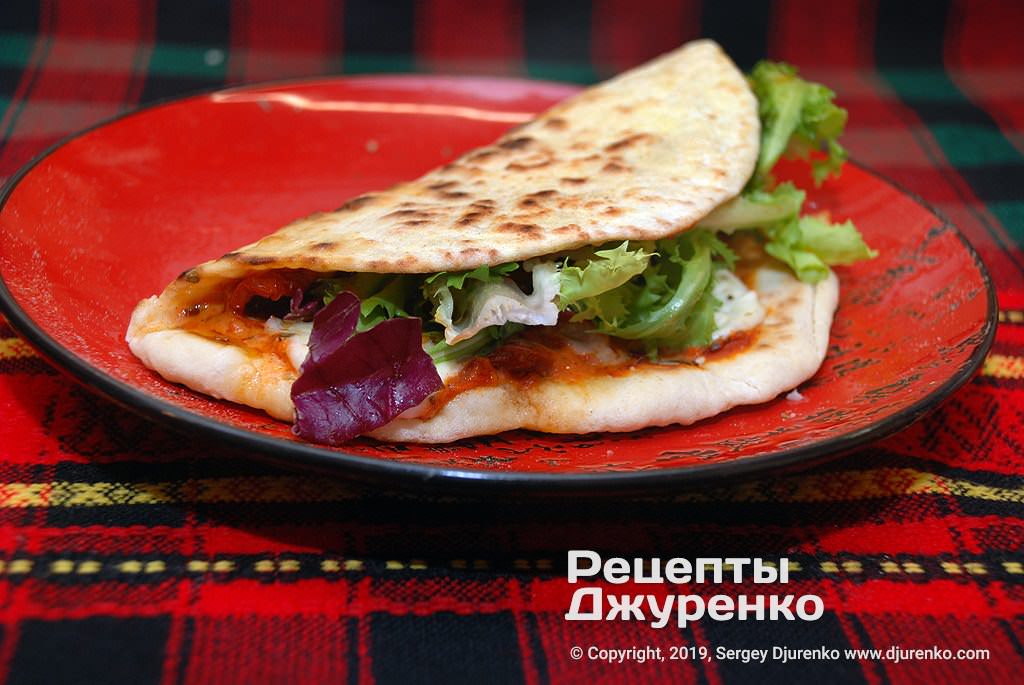
Serve right away: piadina should be eaten while it is warm. Thin flatbreads of 2-3 mm, the kind made as snacks, can be folded in half, which is convenient for holding in your hand. Thicker ones can be served on a plate, though they are easy to hold in your hands too. Another option is to roll the flatbread into a wrap or serve it like a closed pie. Choose to your taste. I recommend washing it down with wine or tomato juice.
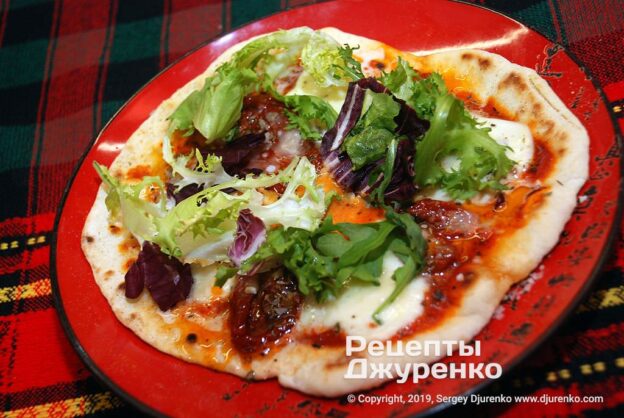
The filling for piadina can include a great variety of foods, whatever you like. Ham and sausages, all kinds of cheese, arugula and basil are very popular.
Calories and macros
299 kcal
100 g
- Protein13 g18% of kcal
- Fat12.9 g40% of kcal
- Carbs31.1 g43% of kcal
Calculated from the recipe ingredients, excluding salt and spices. Data: USDA and Matvaretabellen.