
Spaghetti al Nero with Seafood and Anchovies
Ingredients
2 servings
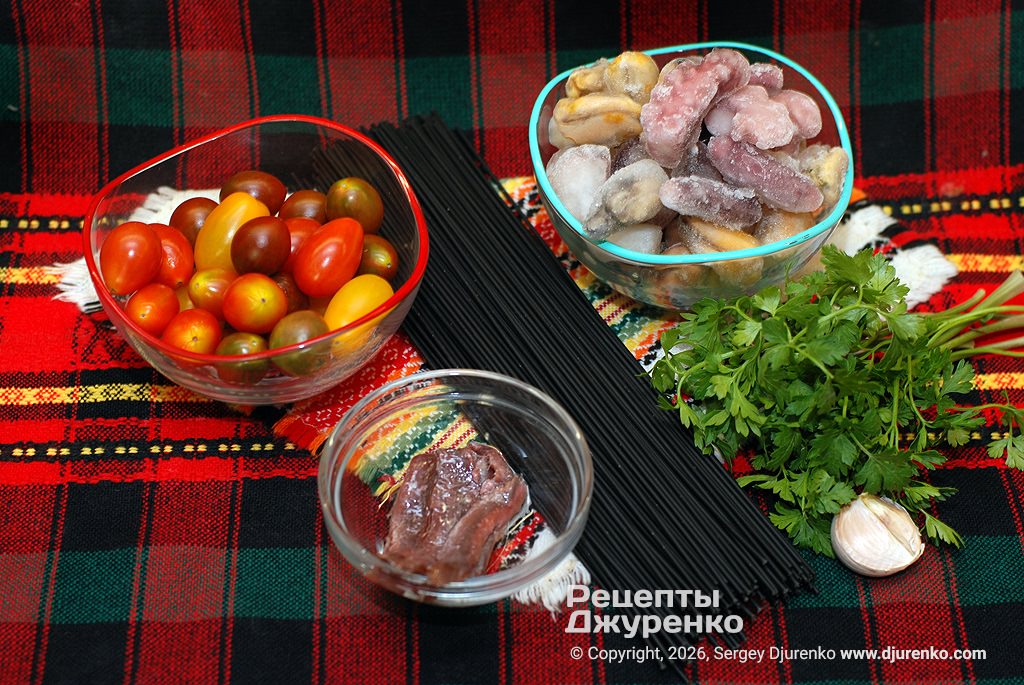
- Black spaghetti (Spaghetti al Nero di Seppia) 200 g
- Water for boiling the pasta 2 l
- Salt for boiling the pasta 10 g (5 g per 1 l of water, the anchovy sauce is salty)
- Frozen seafood 150 g
- Small ripe tomatoes 100 g
- Salted anchovy fillets 25 g
- Garlic 1-2 cloves
- Parsley 0.5 bunch
- Olive oil 2 tbsp
- Parmesan (grated) 2 tbsp (14 g)
- Black pepper, dried oregano to taste
- Salt for the sauce to taste, very carefully
Step-by-step recipe
Tomatoes and seafood
Spaghetti al nero with seafood and anchovies doesn’t take long to cook, and the dish is simple and delicious. Good spaghetti made with cuttlefish ink is easy to buy: even if supermarkets don’t always stock it, online shops offer a choice. Get a frozen “seafood cocktail” to go with the pasta, which usually contains octopus, squid, mussels and other seafood. Also buy small ripe tomatoes, cherry or cocktail, and a small jar of salted anchovy fillets in oil.
When buying frozen seafood, pay attention to how it looks. If it has been frozen twice, you will see traces of ice and the pieces will be stuck together. Freshly frozen seafood is usually “dry”: the surface of the pieces is matte and they look like separate pebbles that pour freely.
The sauce and the pasta are cooked at the same time, so it’s best to put the pasta water on the heat in advance.
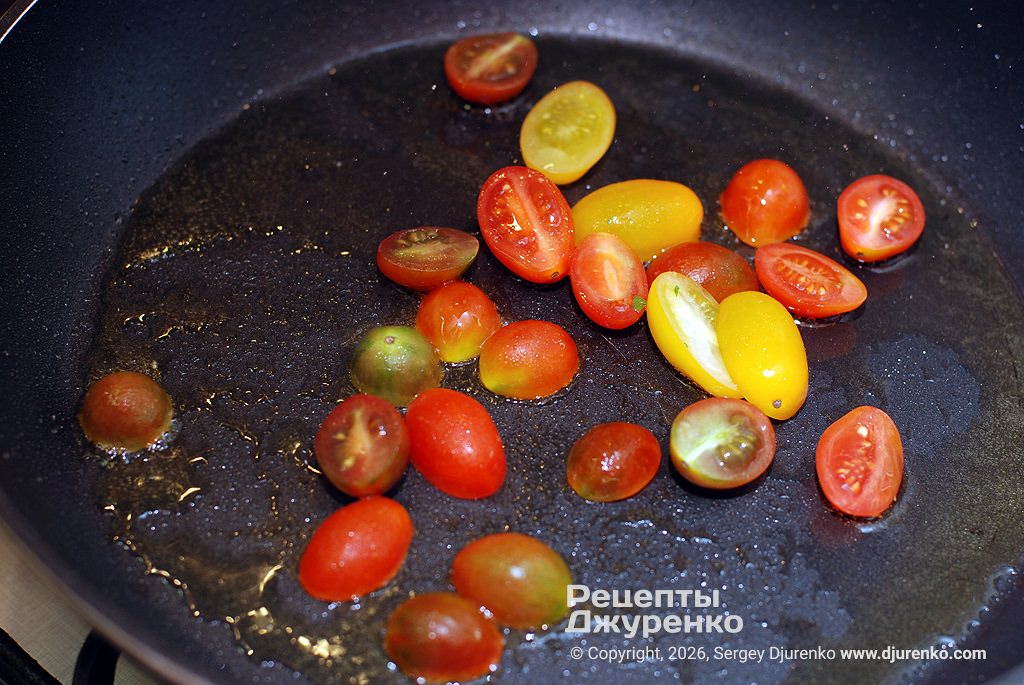
Fry the tomatoes in garlic oil. Small ripe tomatoes look good in this dish, especially multicolored ones, which look pretty. Red cherry tomatoes will also work, as will one large tomato cut into cubes. Cut small tomatoes in half so they release a little juice as they fry. Heat the olive oil in a frying pan over medium heat and fry 1-2 peeled garlic cloves, crushed with the flat of a knife. When the garlic starts to darken, throw it away. Add the tomato halves to the flavored olive oil and fry them for 1-2 mins until they release juice.

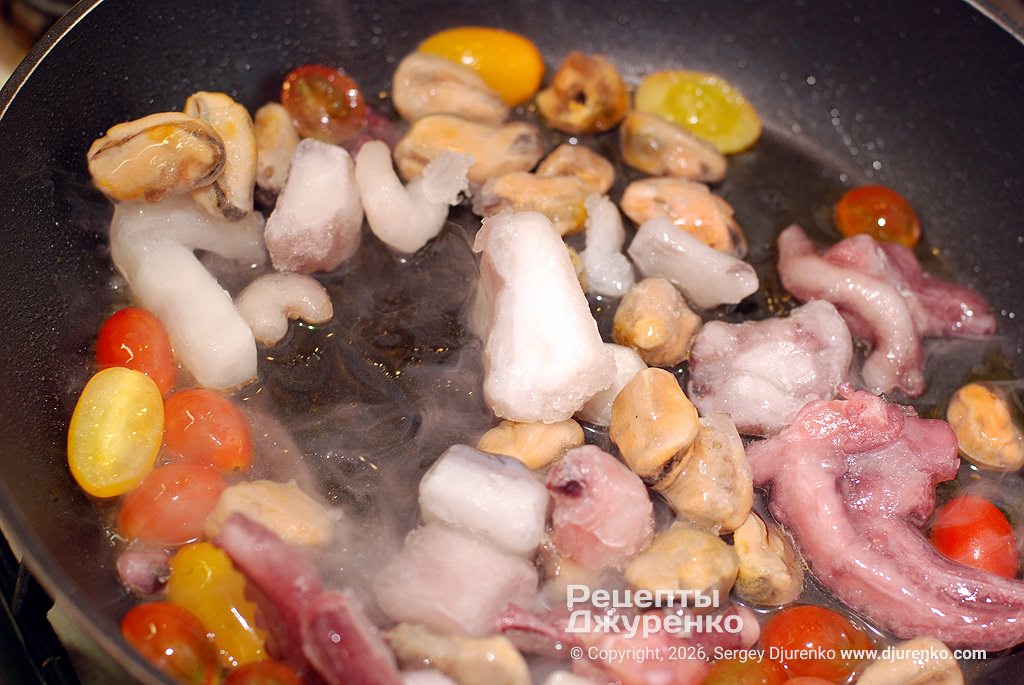
Add the seafood. You don’t need to thaw it: just add it to the pan with the fried tomatoes, reduce the heat to below medium and cover the pan with a lid for 2-3 mins, until the seafood has warmed through.

Pasta and anchovies
Cook the spaghetti al nero. Bring 2 l of water to a boil over high heat and add salt: 10 g, which is 5 g per 1 l, because the anchovy sauce is salty. The time to reach al dente is always printed on the pack. It may differ from the time for regular spaghetti, because black spaghetti contains cuttlefish ink.
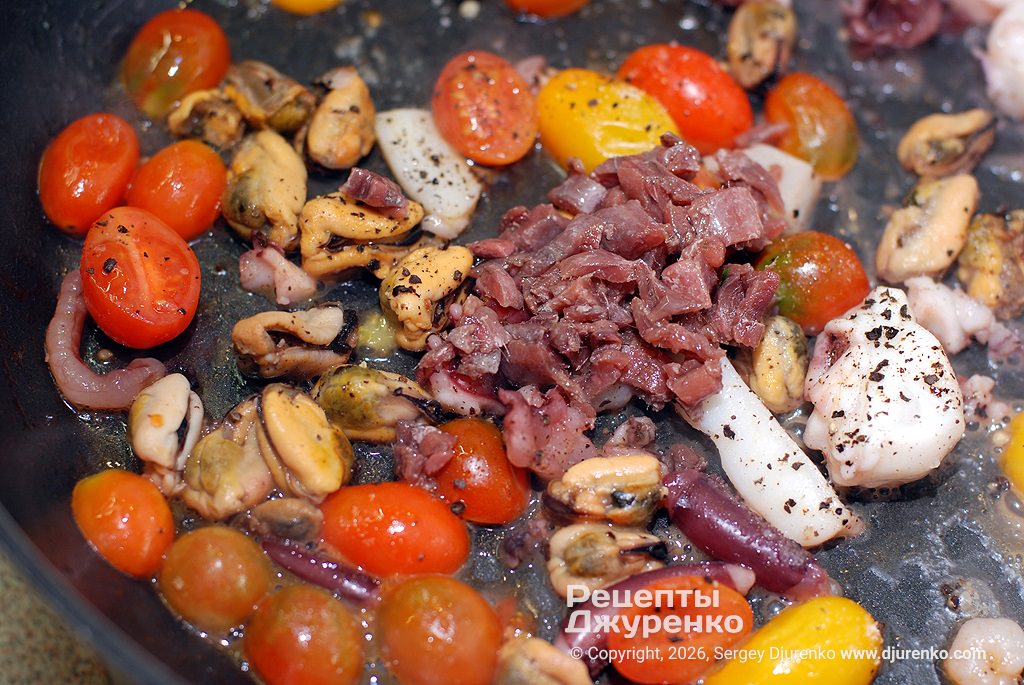
Add the anchovies to the seafood. When the pasta is almost done, add the anchovy fillets, chopped with a knife, to the pan with the seafood. Season them with a little freshly ground black pepper and add a pinch of dried oregano.

Don’t overheat the anchovies for long: they should keep their fishy aroma and flavor. You can salt the dish, but very carefully, since anchovies can be very salty.
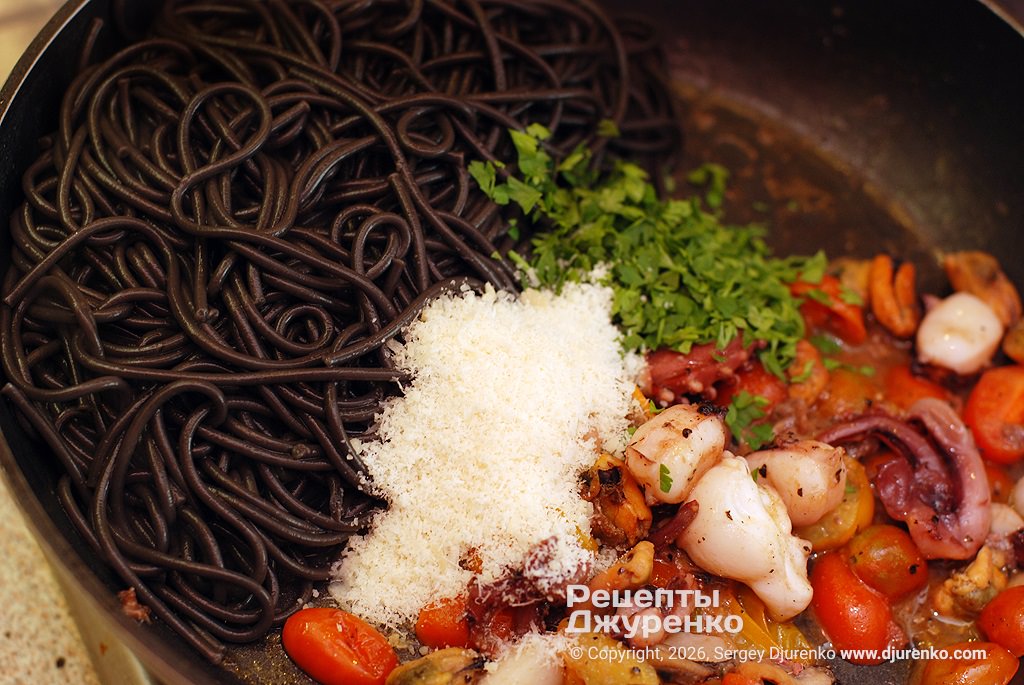
Combine the spaghetti with the seafood. Drain the cooked black spaghetti in a colander, then transfer it to the pan with the seafood and anchovies. Add finely chopped parsley and Parmesan grated on a fine grater. Toss the pasta and the other ingredients so everything is evenly distributed.

Serving
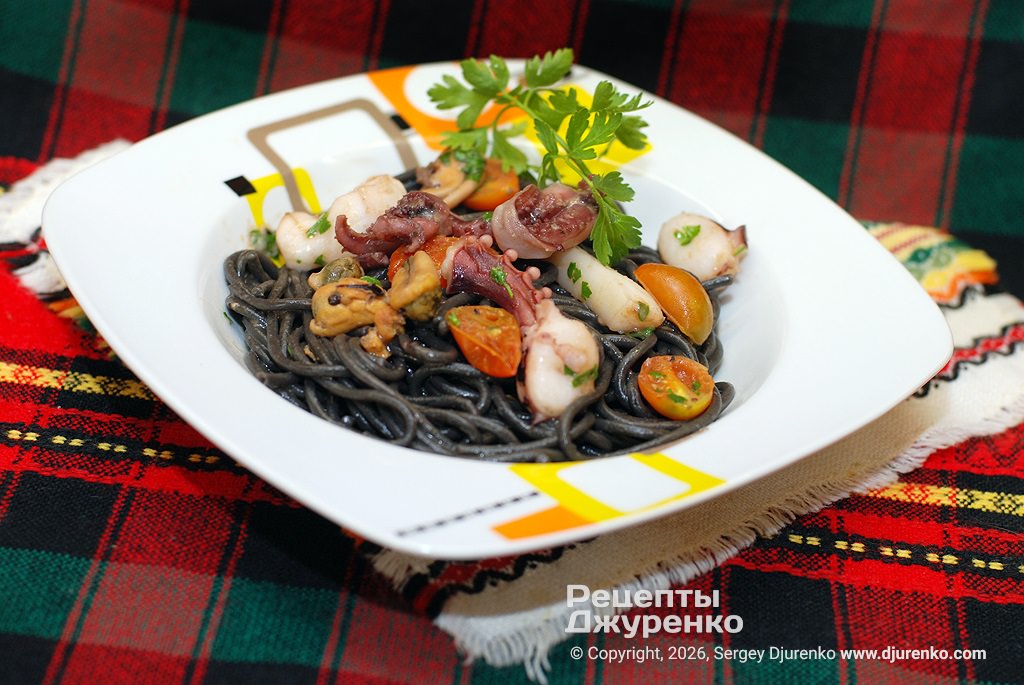
Divide the spaghetti al nero among plates and top with the tomatoes and seafood left in the pan. The pasta turns out fairly moist, even though there is no sauce as such. The olive oil and the juice the tomatoes released replace it nicely. If you like, sprinkle a little more Parmesan over the pasta just before serving. The dish should be hot: as it cools, most of the flavor and aroma is lost.

If you decide to use fresh seafood that has never been frozen, heat it very gently. If overheated, it is very likely to turn “rubbery”. Instead of Parmesan you can use similar cheeses such as Grana Padano or Pecorino. Don’t use basil in this dish: its flavor and aroma are too intense and it will drown out the sea notes.
Calories and macros
625 kcal
Serving ≈ 380 g
- Protein31 g21% of kcal
- Fat19 g29% of kcal
- Carbs76 g50% of kcal
100 g165 kcalProtein 8.3 gFat 5.1 gCarbs 19.9 g
Calculated from the recipe ingredients, excluding salt and spices. Data: USDA and Matvaretabellen.