
Pasta Cardinale
Ingredients
2 servings
For the sauce
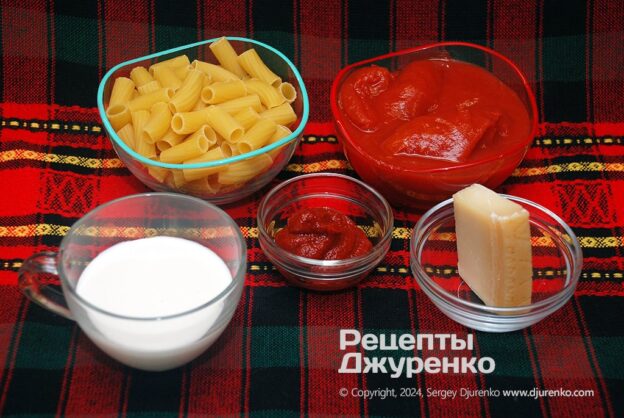
- Tomato pulp 250 g
- Tomato paste 50 g
- Cream (20–25%) 200 ml
- Garlic 2-3 cloves
- Olive oil 30 ml
- Fresh basil 1 sprig (plus more for serving)
- Salt, sugar, chili, oregano to taste


For the pasta
- Short pasta 200 g
- Water for boiling the pasta 2 l
- Salt for boiling the pasta 14 g (7 g per 1 l of water)


For serving
- Pecorino or Parmesan 50 g

Step-by-step recipe
Sauce
For a really tasty pasta Cardinale, it is best to use ripe tomatoes. Out of season, though, peeled tomato pulp works perfectly. Cans are sold in any shop, and it is a popular product. Use fairly rich cream, and of course natural cream: when combined with tomato, a poor-quality dairy product often forms lumps that look like cottage cheese.
When preparing the sauce, you can fry finely chopped shallots, which gives the sauce a more varied flavor. Instead of olive oil, you can use butter.
Prepare the tomatoes. If you are using fresh ripe tomatoes, scald and peel them. You can leave the seeds, they won’t get in the way. Chop the pulp any way you can. If the canned tomatoes are not chopped, just mash them with a fork or by hand.
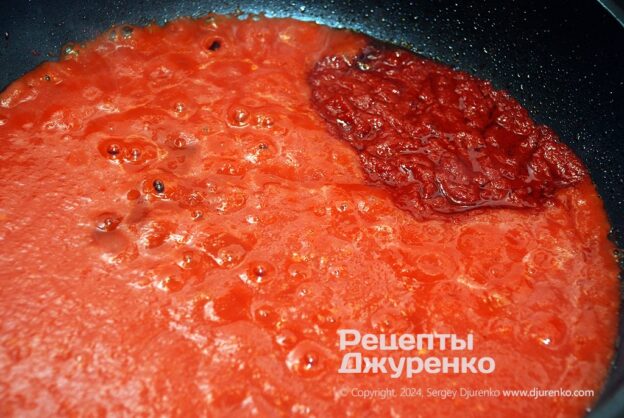
Fry the garlic and tomato paste. Heat the olive oil in a large frying pan over medium heat. Peel 2–3 garlic cloves and crush them with the flat of a knife. Fry the garlic in the oil until it starts to darken, then discard it right away. Add the tomato paste to the oil, which noticeably strengthens the tomato flavor of the sauce. Fry the paste for 1–2 mins, then add the chopped tomato pulp.
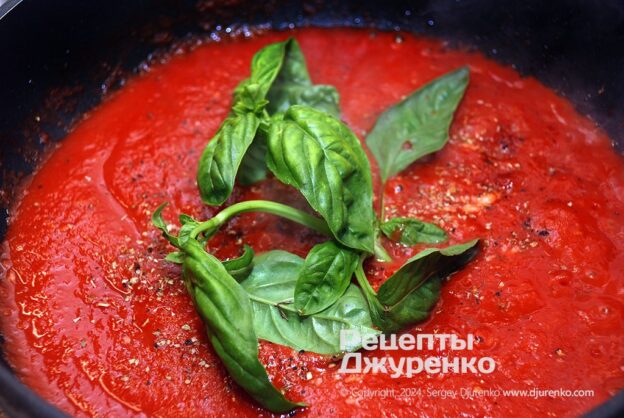
Season and simmer the tomato with basil. Salt the tomato in the pan and add a pinch of dried oregano and a little sugar, which noticeably improves the flavor of the sauce. If you like, add a pinch of coarsely ground chili. Stir the sauce and put a whole sprig of fresh basil in it, to flavor the sauce. Simmer the sauce over medium heat, covered, for 8–10 minutes. Then take out the basil sprig and discard it.
Whether to add other spices is up to you. Black pepper is often used and is very aromatic. Dried Italian herb mixes will also work. In any case, add them together with the basil and oregano.
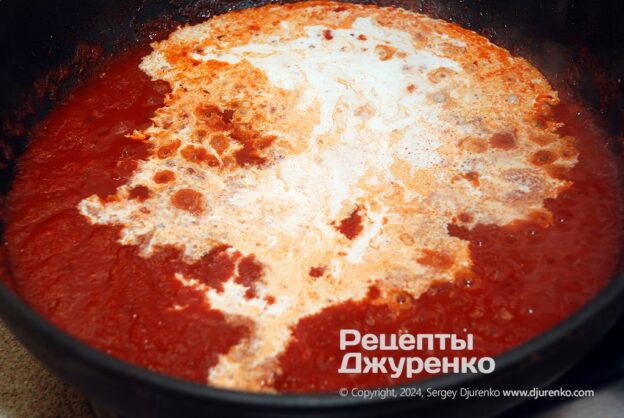
Pour the cream into the tomato, and the sauce will become lighter. Bring it to a boil and simmer over low heat, uncovered, stirring, for 5 mins until the sauce is thick. Taste the sauce, as it may need a little more salt. If the sauce turns out too thin, cook it down or thicken it with flour.


Pasta
For this dish, use short tubular pasta: penne, rigatoni, tortiglioni, maccheroni. Thanks to the ridged surface and the fairly wide tube, the pasta Cardinale will be evenly coated with sauce and hold it very well.
While the sauce simmers, cook the pasta. In a pot, bring 2 l of water with 14 g of salt (7 g per 1 l of water) to a boil over high heat, add the pasta and cook until al dente, for the time given on the package. Drain the pasta in a colander to let the water run off.
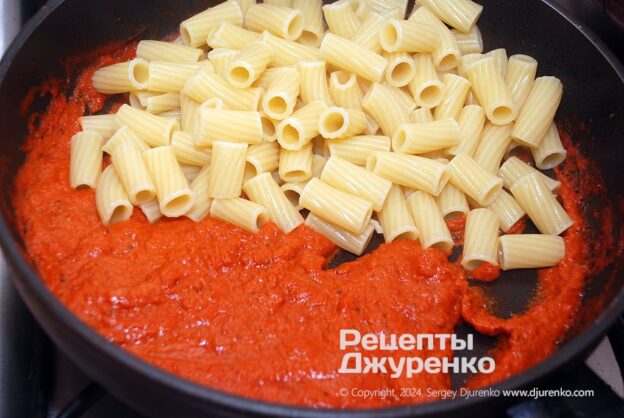
Toss the pasta with the finished sauce right in the frying pan.

Serving
Put the pasta on plates. The sauce is fairly thick and doesn’t spread, so you can use a flat plate. Sprinkle the dish generously with grated cheese, garnish with a sprig of fresh basil and serve.
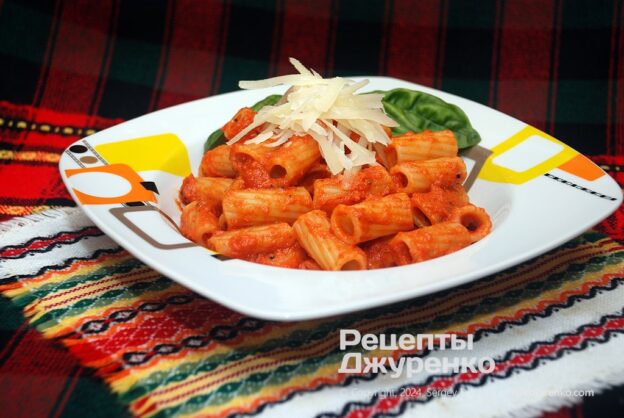
Among the many versions of this dish, a common one is served with hot chili sliced into thin rings, or with a little spicy aromatic oil drizzled over. Give it a try. If you don’t have fresh basil, use dried, which you always have on hand, or sage.


How did you like this recipe?
I really want to know how the recipe turned out for you.
Calories and macros
730 kcal
Serving ≈ 460 g
- Protein18 g10% of kcal
- Fat35 g44% of kcal
- Carbs81 g46% of kcal
100 g158 kcalProtein 3.9 gFat 7.6 gCarbs 17.6 g
Calculated from the recipe ingredients, excluding salt and spices. Data: USDA and Matvaretabellen.