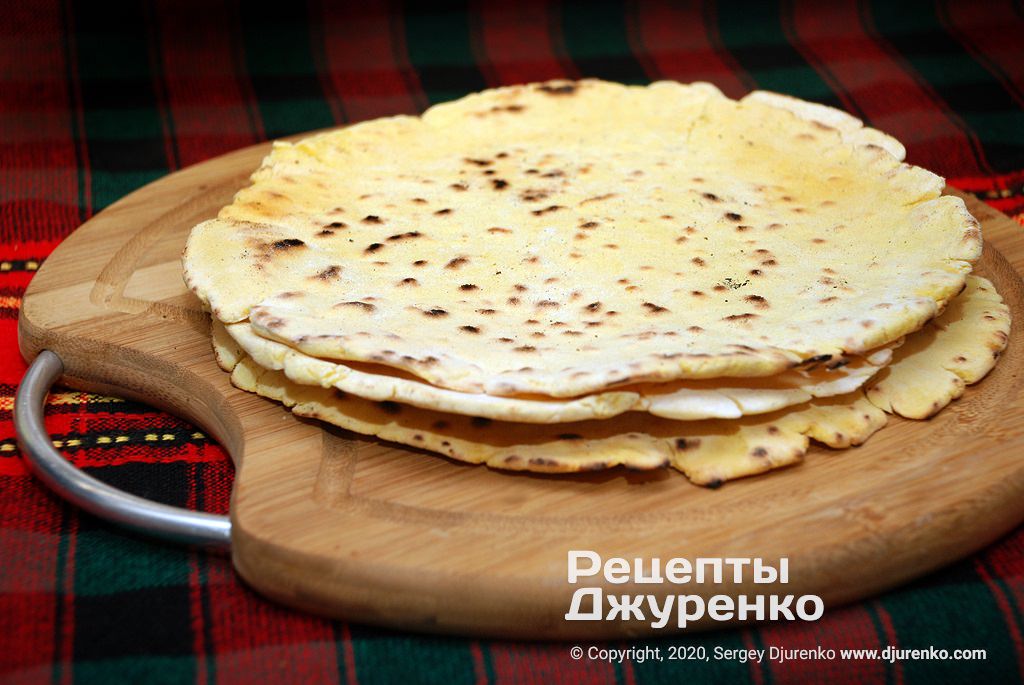
Corn Tortillas in a Skillet
Ingredients
4-6 tortillas
- Cornmeal 1 cup (150 g)
- Wheat flour 2 tbsp, plus a little for kneading (20 g)
- Hot water (60–70 °C) 80–90 ml
- Vegetable oil 2 tbsp
- Salt ¼ tsp
- Baking powder ¼ sachet, optional


Step-by-step recipe
The dough
Corn tortillas are known in many culinary cultures. They owe their origin to the New World, which gave the world the gift of corn. Back in the days of the conquistadors, this simple unleavened corn bread made its way to Europe, where it was called a tortilla. It is a plain bread used for wrapping fillings of vegetables, meat, poultry and so on. It also serves as a base for serving food, as the ingredient for a special kind of chips, and even as a substitute for a spoon.
One cup of cornmeal (150 g) makes 4-6 tortillas that can be used for serving snacks. You can roll them thinner to wrap a filling without them breaking. If you plan to serve them instead of bread, make them considerably thicker.
Mix the dry ingredients. Sift 1 cup of cornmeal (150 g) into a bowl. Add 2 tbsp of ordinary soft wheat flour (20 g) — it greatly reduces the chance of the tortillas tearing. Add a quarter teaspoon of fine salt. If you want fluffy tortillas to serve as bread, add a quarter of a sachet of baking powder. Mix thoroughly so the ingredients are evenly distributed.
Pour about 80-90 ml of hot water from the kettle into a glass and add 2 tbsp of vegetable oil. Stir the mixture and pour it straight into the bowl with the flour.
To keep the dough from cracking as it cooks, the flour should be mixed with hot water. The water should be 60-70 °C. Ordinary sunflower oil will do, preferably a neutral, odorless one.
Bring the dough together with a spatula or an ordinary fork. The dough is not hot enough to burn, so you can carry on kneading it by hand. Turn it out onto the table and keep kneading, adding wheat flour a little at a time. The finished dough should be as soft as possible, yet not sticky at all. Try to catch that fine line.
Roll the dough into a ball, cover it with a cloth and let it rest for 15-20 mins. Cornmeal is usually more coarsely ground and needs a little time to swell.
Cooking
In Central America, corn tortillas are cooked in clay or cast-iron pans, or even on a heated stone. At home, an ordinary heavy-bottomed skillet is perfectly fine.
Put the skillet on the heat and get it good and hot.
Divide the dough into portions. I was making these tortillas for serving snacks, so I made them a little thicker — I ended up with 6.
Roll a piece of dough into a round the diameter of the base of your skillet, or smaller. If the slightly ragged edge bothers you, trim it with a knife or a cutter of the right diameter.
When rolling the dough out, it is best not to dust it with flour. The flour sticks to the surface and burns during cooking. A thin silicone mat marked out for different shapes and sizes is very handy here.
Transfer the tortilla to the hot, dry skillet in one motion. Cook for 1 min. Then flip it — with a spatula, or with your fingers if you can do it neatly and quickly — and cook for another 1 min.
As it cooks, attractive, lightly browned spots form on the surface, making it look like an omelet. They say that is just what tortillas reminded the Spanish of when they were settling the New World.
Transfer the finished tortilla to a board or plate and cover it with a cloth. Be sure to wipe any flour left from the previous tortilla out of the skillet. Cook the next tortilla.
Serving
They dry out quickly and lose their flexibility. So it is best to eat them right away, while they are warm. It is better not to make them ahead — they are simple to make and quick to cook, and they taste better fresh.
If you are going to fold a tortilla in half for a taco or a sandwich, do it while it is still warm.
Arrange cheese, chopped vegetables and herbs on top of a corn tortilla and drizzle with a sauce or simply olive oil, and you have an excellent snack. The fillings can be almost anything you like. What matters is that they are not runny.

How did you like this recipe?
No one has rated it yet — be the first.
Calories and macros
300 kcal
100 g
- Protein4.9 g7% of kcal
- Fat11.6 g36% of kcal
- Carbs41.7 g57% of kcal
Calculated from the recipe ingredients, excluding salt and spices. Data: USDA and Matvaretabellen.